Events have never been short on content ideas.
They have been short on content that is fast, authentic, and actually usable.
For years, event teams have told us the same thing:
At the same time, audiences have become increasingly skeptical of overly produced marketing and synthetic messaging. Trust now comes from people. From peers. From lived experience.
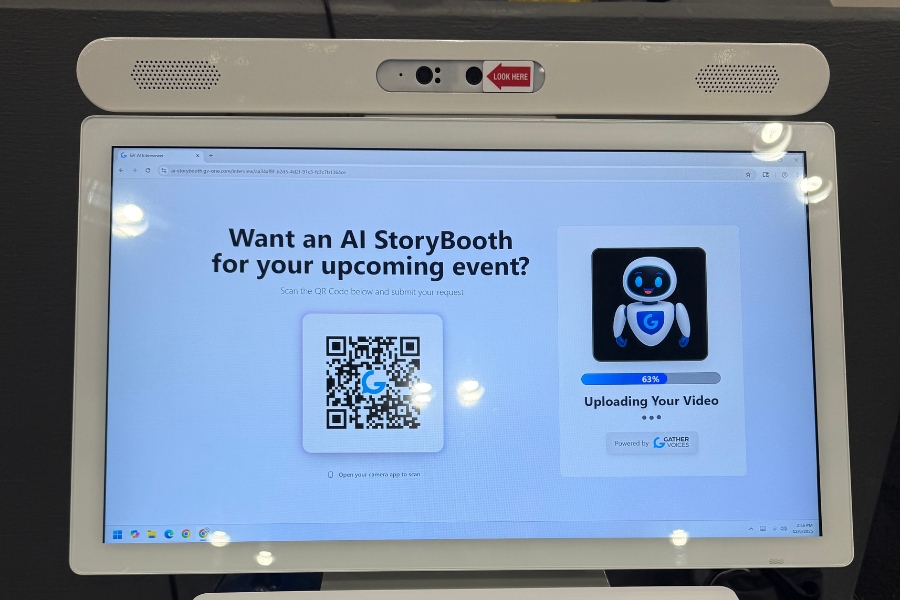
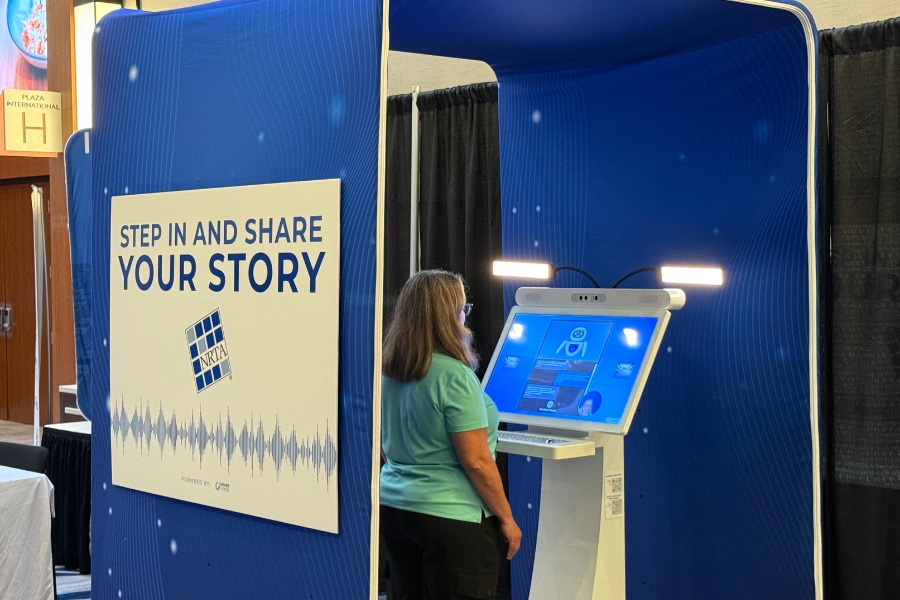
That tension is what led us to create the AI StoryBooth. A guided, on-site video storytelling experience designed to help events capture real stories, in real time, without turning the show floor into a production studio.
Rather than launching it with fanfare, we took a different approach. We quietly placed the StoryBooth on live show floors and watched what actually happened.
What we learned surprised us, and it reshaped how we think about event content, AI, and authenticity.
It is easy to make technology look good in a demo.
It is much harder to make it work at a live event.
Real events are crowded, noisy, and unforgiving. Attendees are busy. Attention is fragmented. Anything that introduces friction is ignored.
So instead of asking theoretical questions, we focused on practical ones event organizers care about:
If something works in that environment, it tends to work everywhere else.
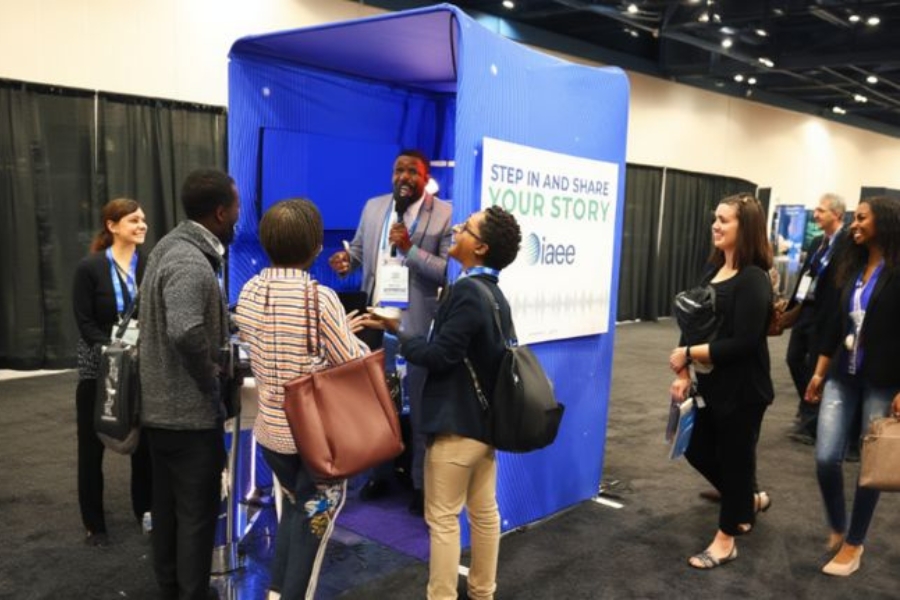
Across multiple pilots at different events, a clear pattern emerged.
Attendees approached the AI StoryBooth on their own.
They engaged with the AI guide naturally, without scripts or coaching.
They completed their recordings and shared their videos immediately.
There was no production crew. No traditional filming setup. No awkward handoff.
Most importantly, the technology did not dominate the experience. It faded into the background.
Once the first question felt thoughtful and human, people leaned in. The AI guided the conversation without replacing the human moment. That balance turned out to be critical.
We also saw something we did not fully expect. In a busy, public environment, the guidance actually lowered the barrier to participation. Attendees felt supported rather than put on the spot, which changed how confidently they showed up on camera.
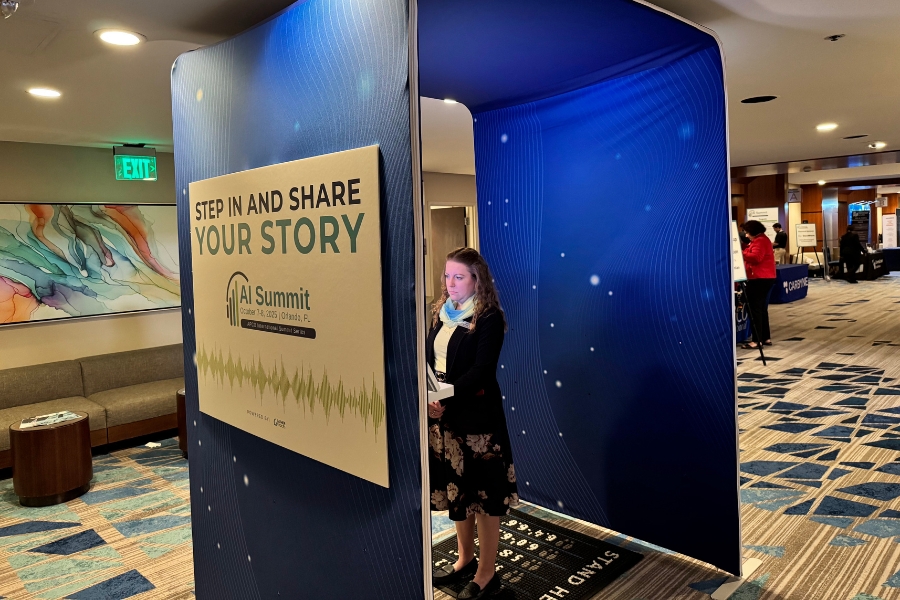
One of the biggest shifts we observed had nothing to do with AI. It had to do with timing. Videos were captured, branded, and ready to share during the event itself.
That changed everything.
Instead of content being a post-event deliverable that surfaced weeks later, it became a live engagement asset. Organizers could use it while the energy of the event was still high.
The most common feedback we heard was simple:“This didn’t slow us down.”
That is the real test of any show floor activation. If it adds friction, it will not scale.
These pilots worked because they reduced complexity. They delivered outcomes without adding staffing burden or operational drag.
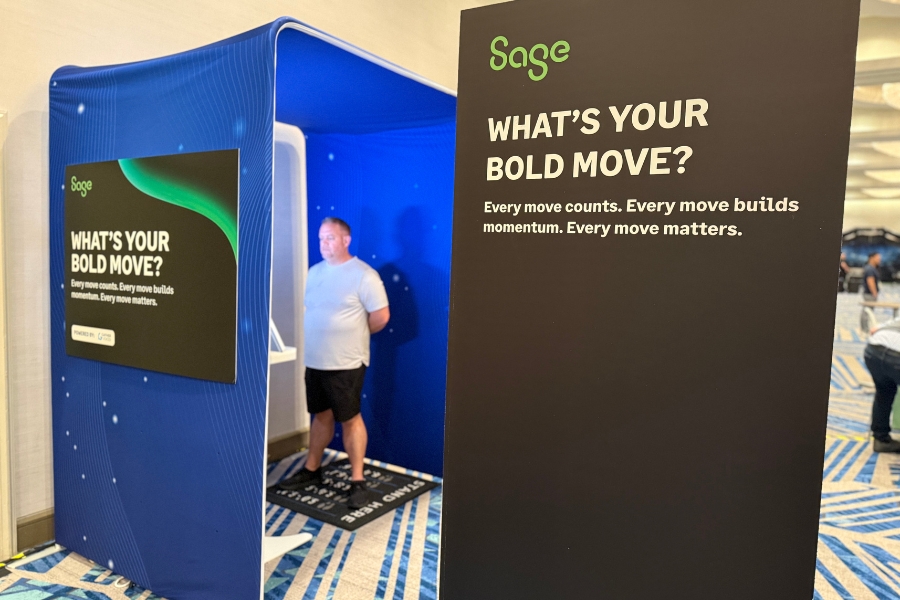
As pilots progressed, it became clear the StoryBooth was not just an activation.
Event teams began to see it as:
Sponsors shifted their focus away from impressions and toward trust and authenticity. Attendees participated not because they were asked, but because they wanted to be part of the story.
What emerged was something bigger than highlight reels.
A living library of real voices. Stories that extend the value of an event long after it ends.
The AI StoryBooth is not about chasing viral moments.
It is about creating repeatable ones.
In a world where synthetic content is increasingly easy to generate, real voices are becoming the premium. Events are uniquely positioned to surface those voices, if the tools respect the environment they operate in.
What these pilots reinforced is simple:
When AI supports human expression instead of replacing it, authenticity scales.
That insight now shapes how we think about the future of event storytelling. Less polish. Less friction. More trust.
And more stories worth sharing.
Want to learn more! Let's chat >