
The Trust Crisis Is Here. Your Members and Attendees Are the Answer.
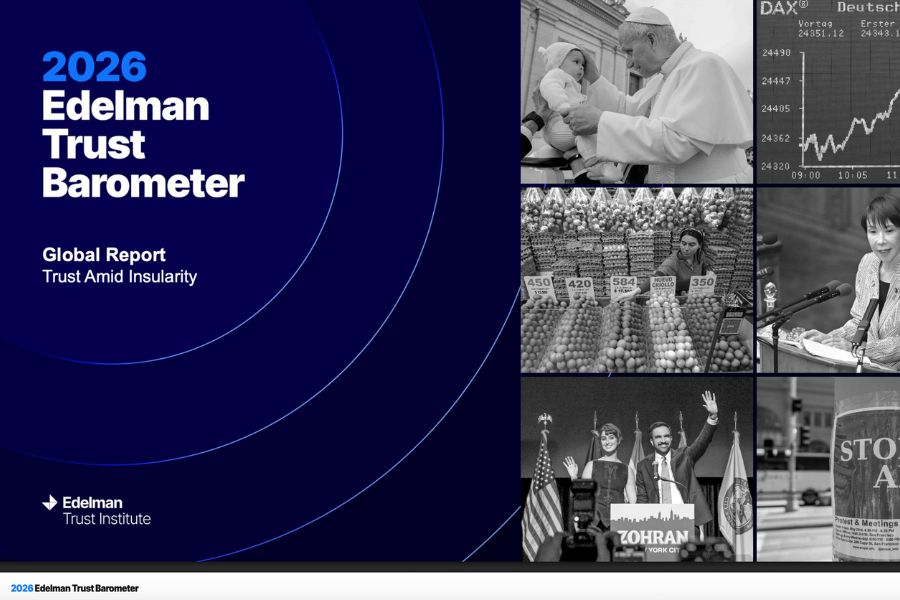
The 2026 Edelman Trust Barometer, released in January, landed with findings that deserve serious attention from anyone running events or membership organizations.
For 26 years, Edelman has tracked who people trust, and the direction has been uncomfortable for a while. This year marks a new threshold.
Grievance has devolved into insularity. Seven in ten people globally report unwillingness or hesitance to trust someone with different values, approaches to social issues, backgrounds, or information sources. People are not just polarized. They are retreating into smaller circles, and they are comfortable there.
The implications for your organization are direct.
The headline finding from this year’s report is what Edelman calls the shift from “We” to “Me.” Institutional leaders have experienced net trust losses — national government leaders (–16), major news organizations (–11), foreign business leaders (–6) — while those in close proximity have gained trust: neighbors, family and friends (+11), coworkers (+11), and “My CEO” (+9).
The people your members and attendees trust most are not credentialed experts or polished brands. They are people they actually know. People who share their world, their industry, their daily frustrations.
In the absence of trusted information, people are turning to family, friends, and even their bosses to figure out the world. If your association or event organization is still leading with institutional voice — press releases, top-down messaging, the letter from the board chair — you are speaking in a register your audience has largely moved past.
What this means practically: the most believable thing your organization can publish is not what you say about yourself. It is what your members, attendees, speakers, and exhibitors say about their experience — in their own words, on camera, without a script.
Trust is no longer defaulting upward to institutions or outward to celebrity. It is flowing inward, toward community, toward shared values, toward people who feel familiar.
Your community is exactly that. A member who has attended your conference for eight years, a speaker who has built their reputation in the industry, an exhibitor who closed real deals on the floor last year. These are the voices your prospective members and future attendees actually believe. And most organizations are barely capturing them.
One of the more actionable ideas in the 2026 report is the concept of trust brokering. Rather than trying to change people, trust brokering surfaces the common interests of insulated parties and translates their needs, goals, and realities for one another. A trust broker can be a person, an organization, or an institution that each stakeholder group already trusts.
Your event is already doing this work. It is the room where competitors sit at the same table, where a first-time attendee meets the person who changes their career, where a sponsor and a buyer discover they have the same problem. The question is whether you are capturing that and letting it live beyond the four days of the conference.
Most organizations are not. The moment ends, the badges go in a drawer, and the trust built in that room dissipates without a trace.
Among people who already trust someone different from themselves, they do so because that person has an open mind, does not try to change them, and is transparent about how they differ. Positive experiences also made an impact — helping that person, or defending them in the face of criticism.
Authentic video works this way. A 90-second testimonial from a long-time member does not push a message — it shares an experience. It is transparent. It invites the viewer in. In a trust environment this fragile, that difference matters more than most marketing teams appreciate.
Spotlighting collaboration and teams that worked through constructive disagreement can help break down insularity and show audiences that colleagues are worthy of trust. For associations, this translates directly: capture the stories of members who found community, solved a real problem together, or built something lasting through their participation. Those stories do what no campaign copy can.
Insularity is a bottom-line issue, undermining productivity, causing churn, and threatening the basic ability to lead. For membership organizations, churn is existential. A membership that does not feel seen or reflected in your communications is one that quietly starts reconsidering its renewal.
Trust has not disappeared. It has moved. It lives in community, in peer relationships, in real people talking about real experiences. Your next conference, your next chapter meeting, your next event — each one is a room full of that trust.
The question is whether you capture it and put it to work, or let it walk out the door.


