
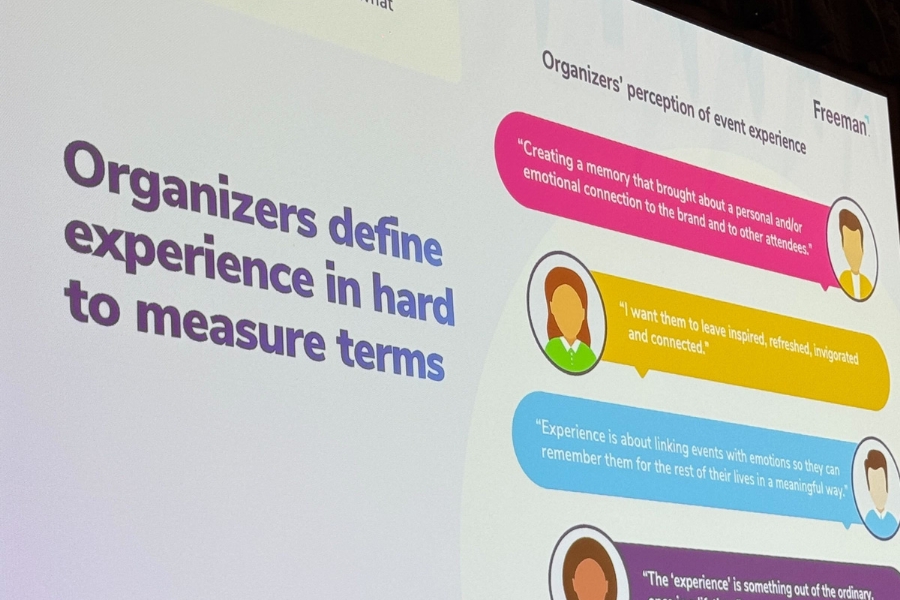
The event industry is evolving faster than most programs can keep up. At IMEX America, Ken Holsinger of Freeman cut through the noise with data that confirms what many planners already feel: attendees judge your event by how well it delivers on their goals, not by how dazzling it looks.
“The workforce is evolving,” Holsinger opened. “The shift has accelerated.”
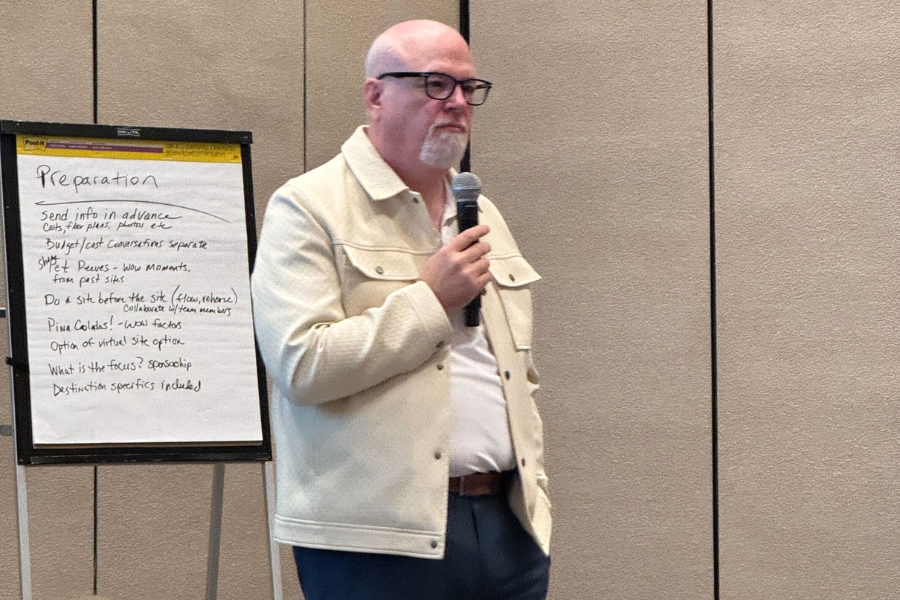
Freeman’s research shows the most effective “experiential” design is not spectacle. The X factor is experiences that directly advance learning, networking, and commerce, with inspiration as fuel. When events do that, retention and satisfaction jump. When they do not, first-time churn and loyalty decay rise.
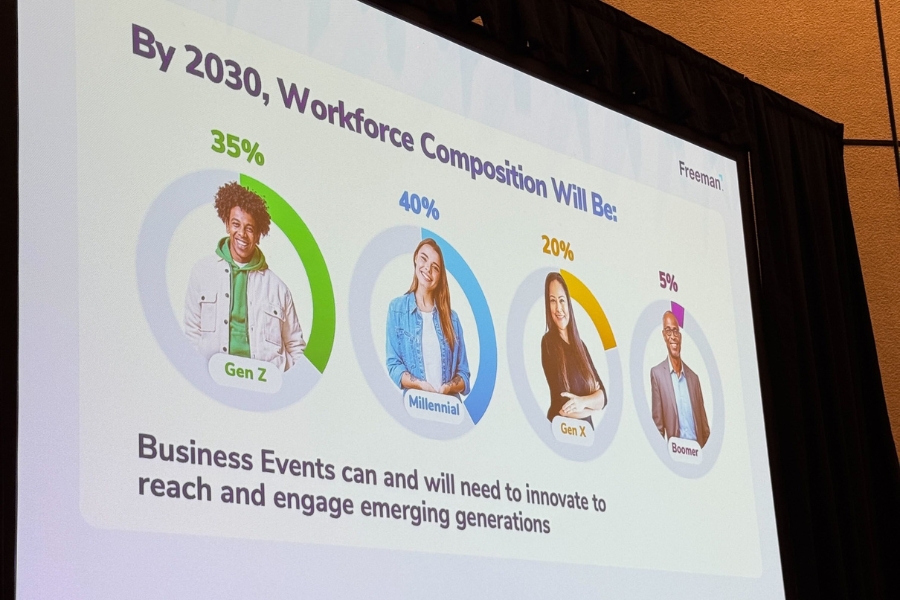
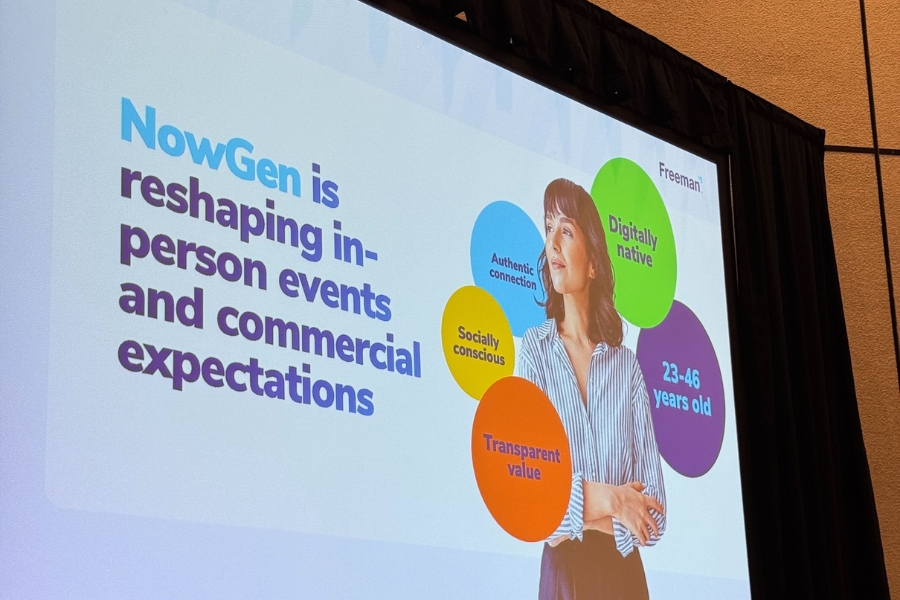
Freeman’s tracking suggests generational change hit earlier than expected. Millennials and Gen Z now represent more than half of the workforce and are gaining decision authority. Planners still skew early 50s, exhibitors late 30s. That mismatch colors expectations and communication.
“This is not the baton hand,” Holsinger warned. “We’re seeing different minds.”
These rising generations are fluent in AI but still trust in-person experiences more than digital claims. They expect events to meet them where they are: personalized, purposeful, and proven.
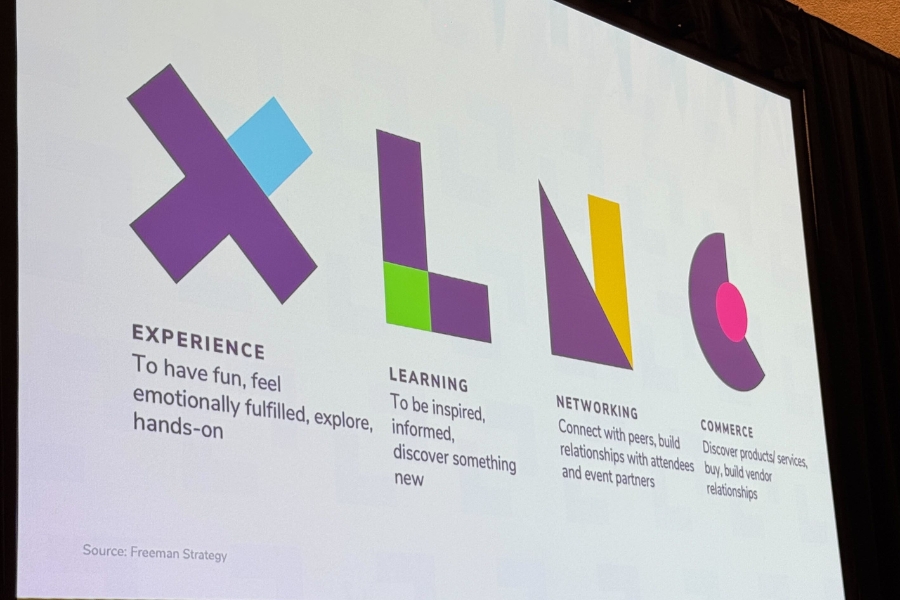
Freeman organizes event value in the XLNC framework: eXperience, Learning, Networking, Commerce. The surprise is where “experience” actually lives.
“We call this the X factor,” Holsinger said. “They rarely come for just experience alone.”
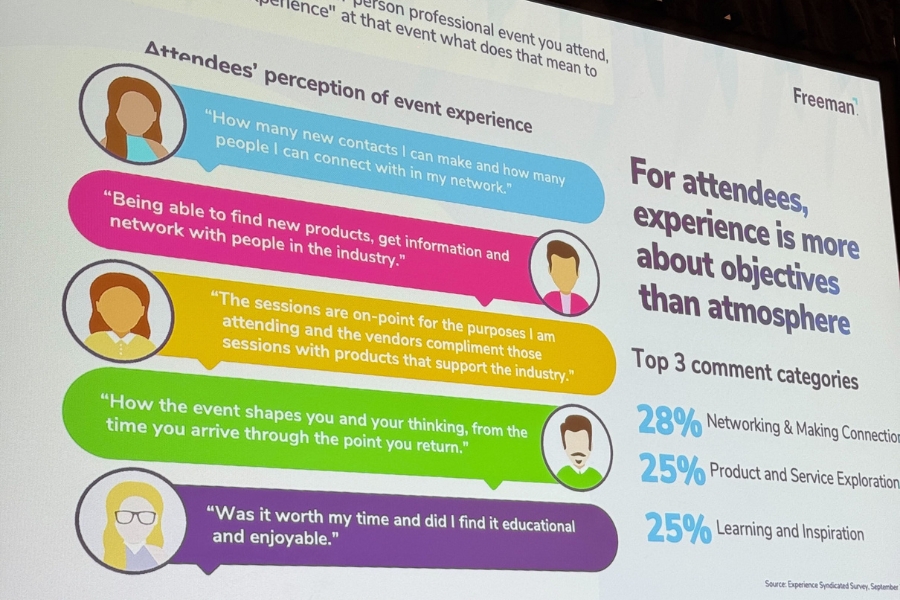
Attendees define great experiences in terms of outcomes:
Inspiration is fuel—but only when it powers these outcomes.
Two findings from Freeman’s data should reshape how we design events:
“Do those first. Do those well,” Holsinger said. The parties are nice, but they are not what moves the needle.
For example a celebrity keynote lift was negligible in the data. While hands-on, outcome-oriented experiences won.
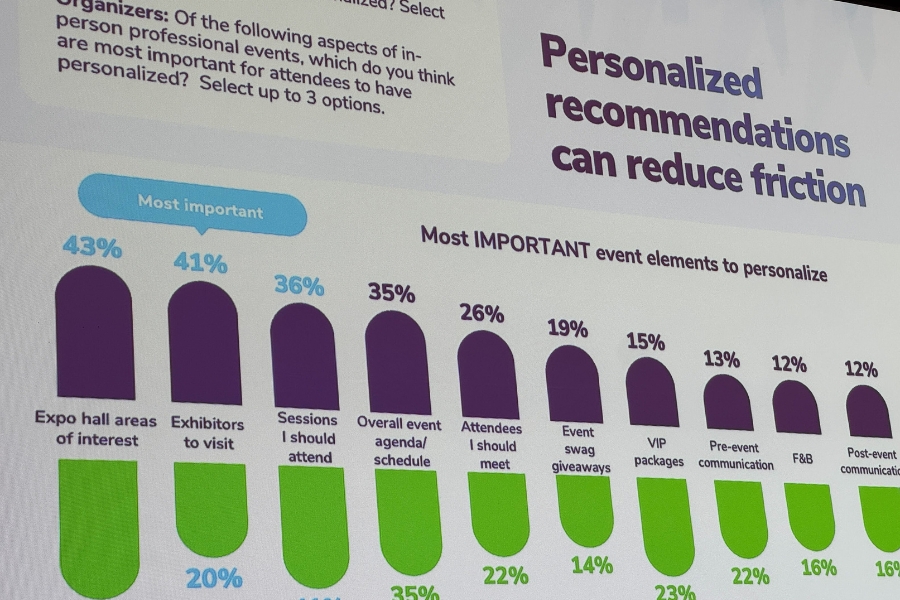
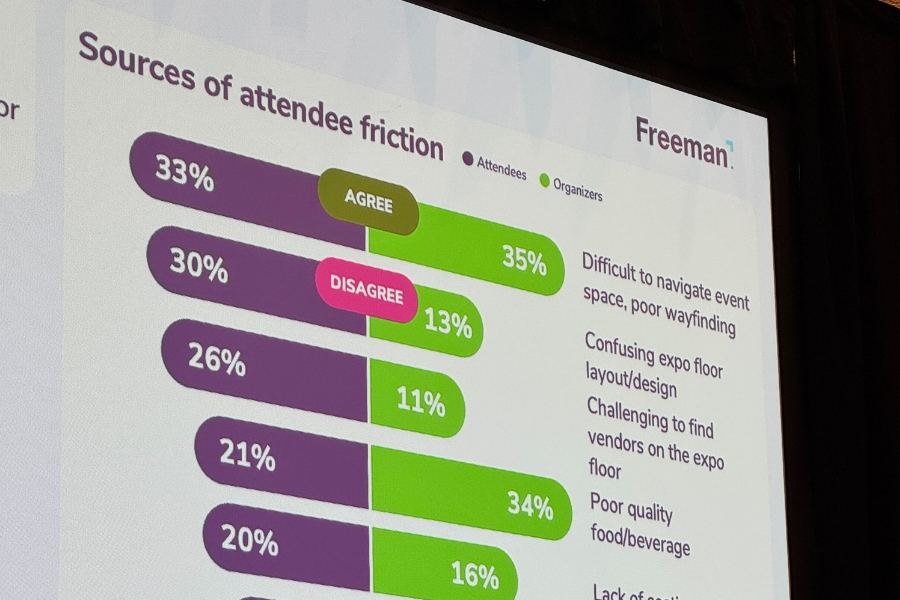
Attendees consistently cite overwhelm and poor navigation as top event pain points. Clever branding doesn’t signal value, clarity does. Wayfinding, simple flows, and right-sized choices help people get to what matters faster.
Personalization also needs a rethink. Stop asking registration questions that help you, not them. Instead, ask about their outcomes. In Freeman’s trials, when attendees received session or product paths “for people like you,” both adoption and satisfaction rose.
Holsinger’s best rule of thumb is disarmingly simple:
“Design for the person in front of you.”
That means:
In other words: less theater, more tangible value.
Freeman’s longitudinal data shows a clear pattern: loyalty fades fast if next-year goals aren’t met. With first-time attendance up the acquisition costs are rising. The fix isn’t louder shows. It’s smarter alignment between attendee intent and on-site delivery.
Gen Z and Millennials expect personalization and proof. Give them both, in person.
If you take one thing from Freeman’s IMEX briefing, take this: The X in “experience” stands for execution. Build around learning, networking, and commerce first, and let inspiration amplify those outcomes. That’s how you create moments that matter. That’s how you get them to come back.


