
For years, event organizers have tried to solve the same problem. People come to events hoping to meet others who can help them grow, yet most still walk into the room without knowing who to talk to or how to start. Traditional networking tools have not changed this much. A list of names in an app does not make anyone feel more confident or more connected. Happy hours help some people, but not everyone wants their networking to depend on extroversion or alcohol.
Recent research shows the weight of this problem. In a new study from Freeman and The Harris Poll, ninety one percent of Gen Z workers say they want a better balance between technology and in person opportunities to connect. Sixty-nine percent say technology has made them feel less connected and more isolated. Most importantly, eighty four percent of Gen Z say face-to-face interaction is the best setting for building strong business relationships, and they are now on track to make up almost a third of the workforce.
People want to meet. They want real conversations, not random encounters. They just need a simpler path to get there.
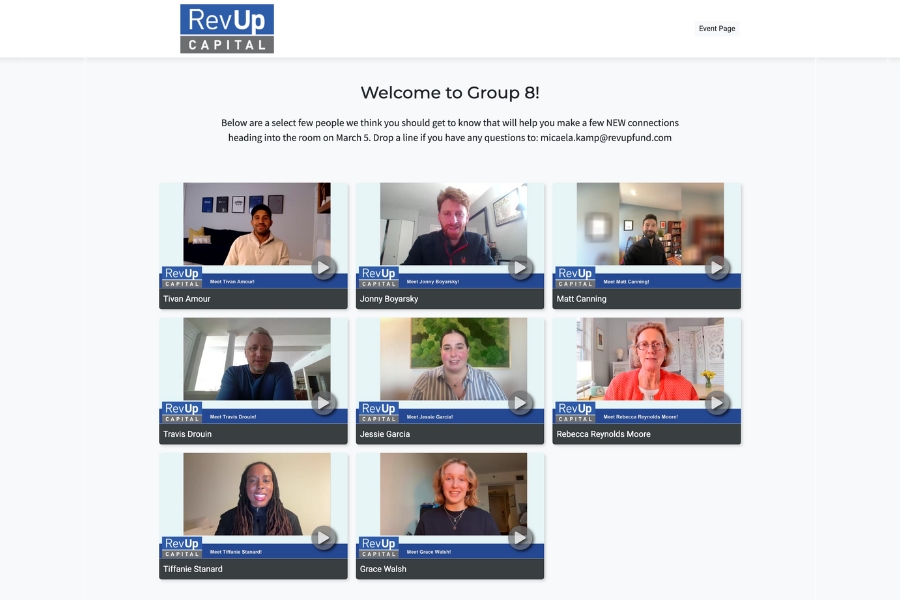
FaceForward was created to make that path clearer. It is an AI-powered networking tool that uses short video introductions to help event attendees discover others with shared goals or interests. Instead of browsing a long, flat list of names, attendees watch real people speaking in their own voices, which makes it easier to recognize who they want to meet. It feels personal, natural, and much closer to an in person experience.
A big part of the design philosophy is simplicity. FaceForward is meant to be easy for event organizers to implement. It fits cleanly into the registration workflow, it does not require a large staff commitment, and it works with the tools organizers already use. The time and budget needed to run it are relatively small compared to most event services, but the impact on the attendee experience can be significant.
Here is how it works. Attendees receive an invitation to join the video based networking experience. They tap a link, record a short video introduction, and answer a few quick questions about what they hope to get from the event. It takes about 90 seconds. People are already comfortable with short form video because they use it every day on platforms like TikTok and Instagram, so the process feels familiar and friendly.
Once the videos are submitted, FaceForward organizes attendees into small, curated groups. These might be first time attendees, young professionals, marketing leaders, startup founders, or people hoping to grow their client base - or most often a mix of these folks. The groupings help people walk into the event with a sense of who they might connect with and why. When people can see and hear someone in advance, they often feel like they already know them a little. This reduces the pressure and awkwardness that many attendees feel at the start of a conference or trade show.
One important principle of FaceForward is that nothing is forced. The tool guides, but it does not prescribe. People see a curated set of introductions, but they choose who they want to meet. This keeps the experience comfortable and open while still providing structure for those who want it.
This approach also helps people who may not thrive in traditional networking environments. Not everyone shines in a crowded reception. Not everyone feels confident walking up to strangers. And not everyone wants to use alcohol as the social lubricant that gets conversations started. Video introductions level the playing field by giving everyone a clear and low pressure way to express themselves before entering the busy environment of the event.
The research backs this up. Only around two in five Gen Z attendees say they feel confident networking with people in their industry. Yet this same group overwhelmingly sees in person events as essential for building relationships and advancing their careers. FaceForward helps bridge that gap by giving people a chance to warm up, practice, and build a sense of familiarity before they arrive.
For event organizers, the benefits go well beyond attendee comfort. Stronger early engagement means higher satisfaction, improved retention, and more vibrant onsite interactions. When people arrive already connected to a small group, they are more likely to participate fully and less likely to drift through the event feeling uncertain or overwhelmed. FaceForward also gives organizers new insight into what attendees care about by revealing the themes and goals that show up most often in the videos.
This creates opportunities to shape better meetups, facilitate targeted sessions, and add small but thoughtful moments onsite that bring these groups together. None of this requires heavy programming. FaceForward is designed to enhance the event without placing extra strain on the team running it.
Live events create lasting emotional impact, but only when they help people meet the right people. Freeman’s newest trends report reinforces this: peak moments that matter are not the gala or the keynote, but the moments when attendees make a meaningful connection, discover a solution they need, or talk with someone who changes their perspective.
This matters for retention. When attendees experience a peak moment, 85 percent say they are more likely to return to the event. Yet most attendees report they never experience one at all. Organizers often assume the spectacle is what creates a highlight, but attendees consistently say their most powerful moments come from personal interactions.
FaceForward gives attendees a much better chance of having those interactions. By helping people walk in already recognizing a few faces and already feeling connected to a small group, it increases the likelihood that someone will experience that moment that makes them want to come back. Connecting with the right people is not a nice-to-have, it is the foundation of second-year attendance.
And this is where FaceForward shines. It makes it far more likely that the event will deliver the moments that attendees remember and value, without requiring big-budget staging or surprise productions.
The value of live events has never been more clear. According to the Freeman Trust Report, ninety five percent of attendees trust brands more after an in person event. People leave feeling more confident, connected, and inspired. When events help attendees build real relationships, those feelings last for months.
FaceForward strengthens that core value. It prepares attendees to get more out of the event, helps them find people who matter to them, and supports organizers who want to create more meaningful experiences without adding complexity.
Events are at their best when people feel like they belong. FaceForward makes that easier. It is a simple way to help attendees walk in with confidence, start stronger conversations, and build the relationships that keep them coming back.
If you would like to see FaceForward in action or explore how it could fit into your next event, we would be happy to show you.


