

The Communicator Awards just dropped their 2025 report on "The Evolution of Brand Storytelling," and if you're in the business of authentic member engagement, you're going to want to pay attention.
They surveyed brand storytelling experts—70% working with traditional brands, 53% with over 20 years of experience—and the findings validate something we've been saying for years: authentic human voices are winning the credibility war.
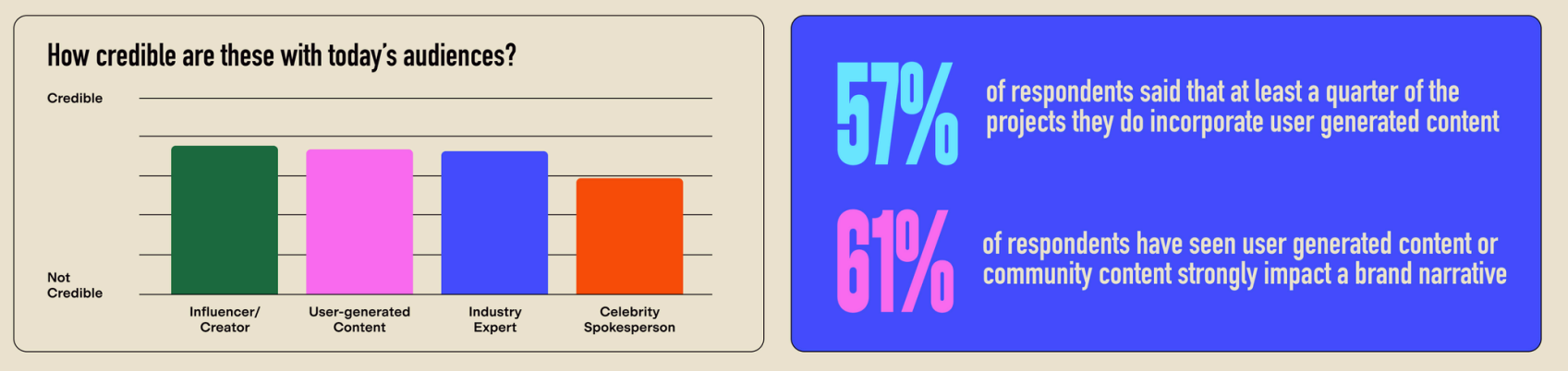
When asked how credible different voices are with today's audiences, here's what rose to the top:
Let that sink in. Real people sharing real experiences now outrank celebrity endorsements and polished corporate messaging.
Here's where it gets interesting. While 79% of respondents say generative AI has significantly influenced their work, AI-generated content ranks among the trends that make them most apprehensive—right alongside hyper-personalization at scale and virtual influencers.
The industry is using AI as a production tool, but audiences aren't buying AI as a storyteller.
As one expert put it in the report, brands are "struggling with managing all the content and messaging going out in a growing multitude of formats to a variety of more refined audience segments." They're turning to AI for efficiency, but not for authenticity.
The report highlights brands like Nike, Duolingo, LEGO, and Dunkin' Donuts as masters of community engagement. What do they have in common? They've figured out how to let their communities become the storytellers.
FIGS (healthcare apparel) invited real healthcare workers to share photos of themselves in scrubs. The result? They turned customers into storytellers and built a community of peers rather than just buyers.
Allbirds showcases fans using their shoes in real-life contexts on social feeds. It tells the story through real people doing real things.
62% of respondents say branded content and entertainment is important to their current strategy. But as the report notes, the best branded content lets creative voices tell authentic stories while the brand "stays in the background, making room for real connections."
Here's my favorite section of the report—when asked what deserves a second act, multiple experts called for the return of short, repeatable narrative storytelling featuring real people:
"One brilliant 1970s advertising storytelling technique I wish brands would bring back is the 'mini-drama' narrative, short, self-contained stories (often 30–60 seconds) that hooked you with characters, conflict, and a clear emotional arc."
— Robert Ellenwood, Owner, 500mph Films
Another expert wished for stories "about real people. Not actors or influencers... just everyday folks with something honest to share."
Sound familiar? This is exactly what member video testimonials, advocacy stories, and Hill Day activations deliver. Real people, authentic stories, emotional connection—delivered at scale.
If you're in the association, nonprofit, or membership space, this report is a roadmap:
The evolution of brand storytelling isn't moving toward more AI, more polish, or more celebrity. It's moving toward more authenticity, more community voices, and more real human connection.
The question isn't whether to embrace user-generated content and authentic member voices. The question is whether you have the systems in place to capture, manage, and share those voices effectively.
Because while 57% of brand storytellers are already incorporating user-generated content in at least a quarter of their projects, that means 43% are still leaving authenticity—and credibility—on the table.
Want to see how associations and membership organizations are scaling authentic video storytelling? Check out our case studies on Hill Day activations, member engagement campaigns, and sponsor value creation—all powered by real voices, not algorithms.


